Your session
Spinal decompression at Prime Wellness Liverpool follows a structured clinical pathway. Every patient is assessed individually before treatment begins.Not everyone is a candidate.
The consultation step exists to protect you and to ensure the treatment is appropriate for your specific condition.

Step 01
Your practitioner reviews your full medical history, performs a spinal examination, and assesses any existing scans or imaging. This determines whether spinal decompression is appropriate and safe for your condition.
Step 02
If you are a suitable candidate, your practitioner designs an individual treatment program. This includes the number of sessions recommended, target areas, and any adjunct care such as chiropractic adjustments.
Step 03
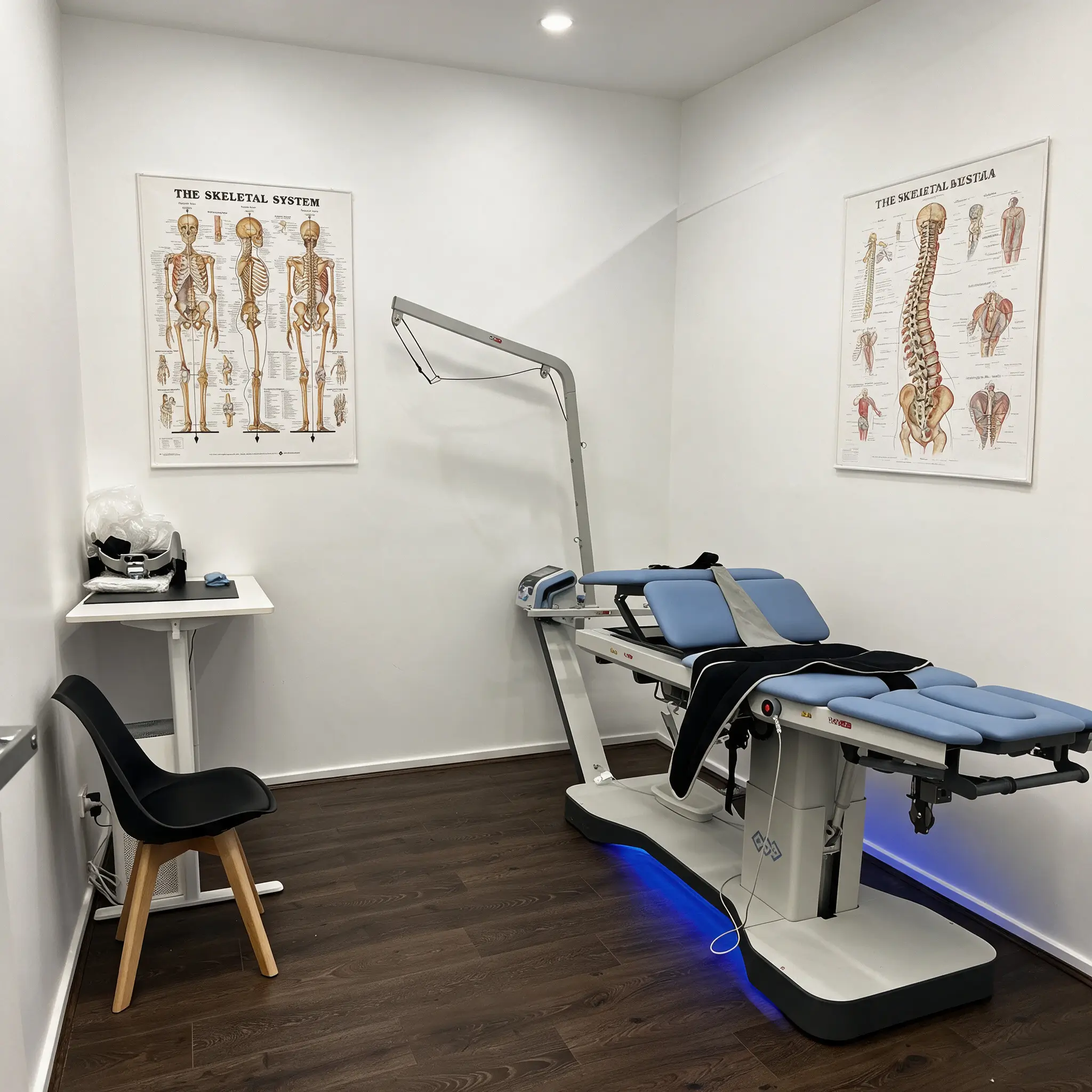
You lie on the clinical-grade decompression table fully clothed. The table applies controlled traction in cycles. Sessions typically run 30 minutes. The treatment is painless and most patients find it relaxing.
Step 04
Your practitioner tracks your response across sessions and adjusts the protocol as needed. Most patients begin noticing meaningful improvement within the first several sessions.
Find us
Parking
Public parking on-site, directly accessible from Hume Highway
Hours
Mon–Fri 7:30am – 7:00pm
Saturday 7:30am – 3:00pm
How to enter
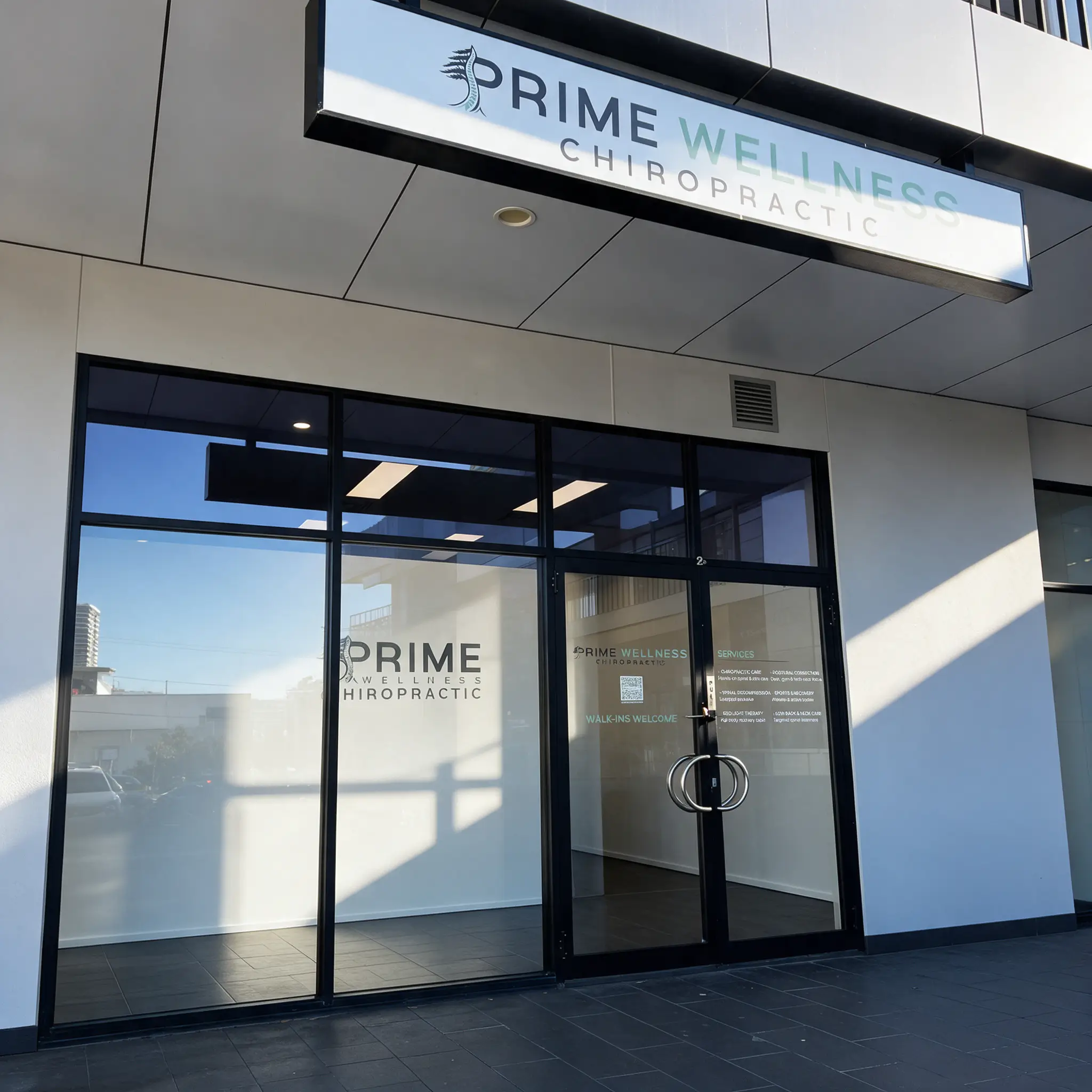
Ground floor entrance facing Hume Highway, Shop 2B
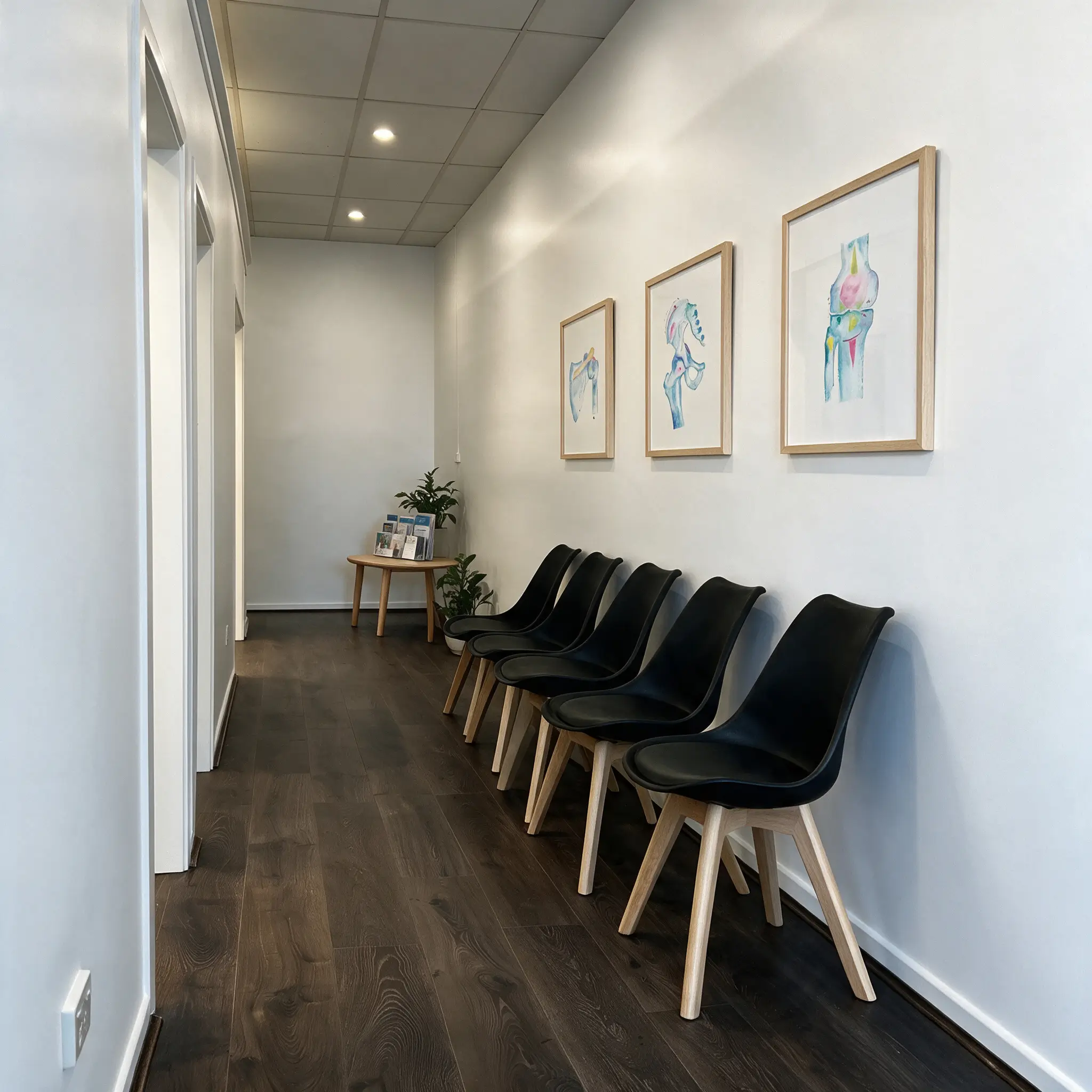
Inside Our Liverpool Clinic

The treatment
Spinal decompression is a non-surgical, drug-free therapy for patients with chronic neck and back pain caused by disc-related conditions. It uses a clinical-grade motorised table to gently lengthen and release the spine through controlled, repetitive traction movements.
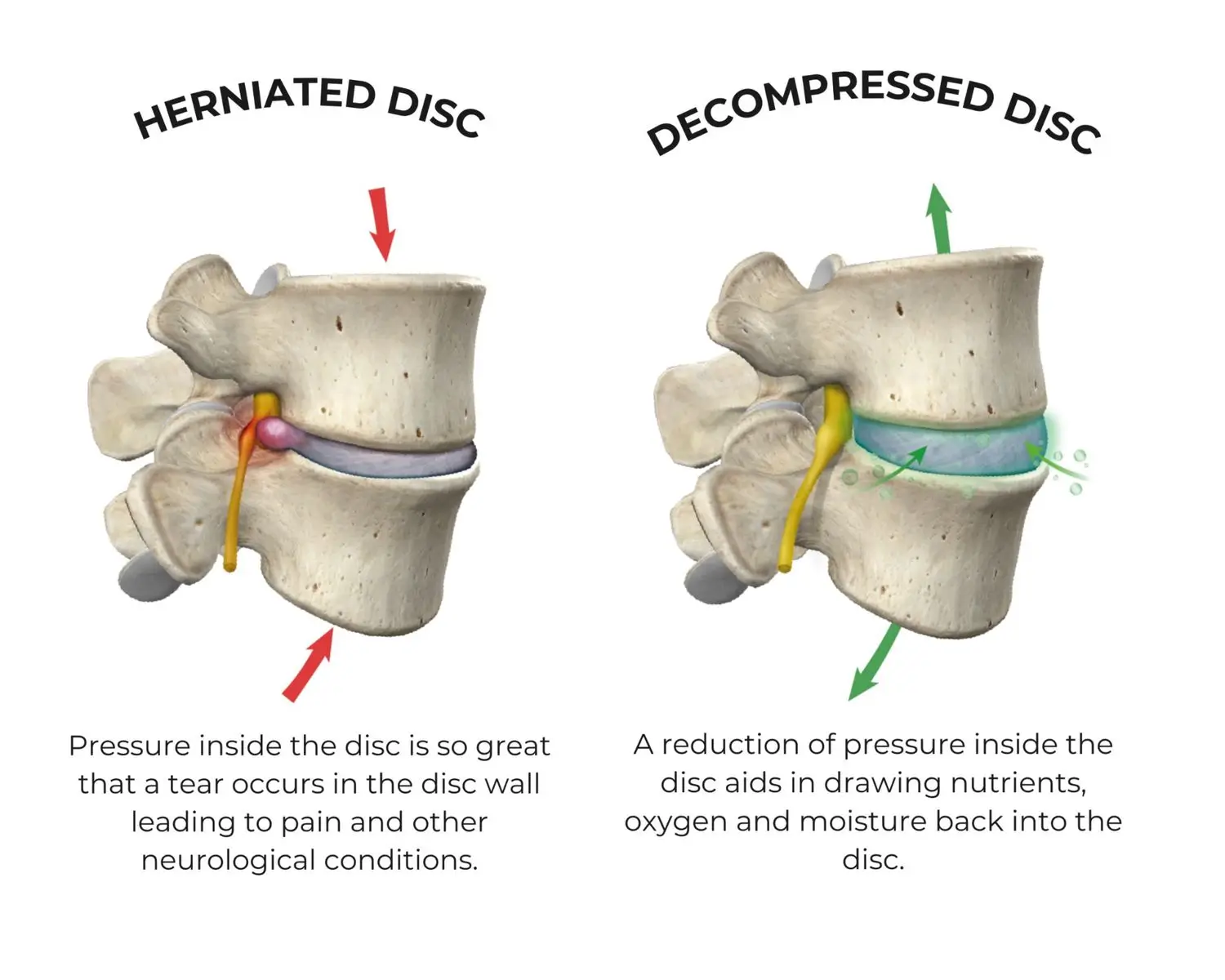
As the table applies and releases tension, a negative pressure change is created within the intervertebral disc. This decompression allows bulging or herniated disc material to retract and draws nutrient-rich fluid back into the disc.
Rehydration of the disc and surrounding structures reduces pressure on nearby nerves, decreases pain levels, and stimulates the body's natural repair process. Research shows continued improvement can be seen up to four years following a full treatment program.
Conditions treated

Herniated or bulging discs
Sciatica
Spinal stenosis
Disc degeneration
Facet syndrome
Spondylosis
Pinched nerves
Arm and leg pain with numbness
Chronic neck pain
Chronic lower back pain
Pain not responding to other treatment
Post-surgical back pain
The science
When a disc herniates or bulges, it compresses nearby nerves and cuts off the nutrient supply the disc needs to heal. Spinal decompression reverses this process mechanically, without surgery or medication, by creating targeted negative pressure inside the affected disc space.
01
The table applies a precise, controlled pulling force along the spine. This gently separates the vertebrae, creating space between them and reducing pressure inside the affected disc.
02
The reduction in intradiscal pressure creates a vacuum effect, drawing the bulging or herniated disc material back toward its central position in the spine and relieving compression on nearby nerves.
03
With compression removed, nutrient-rich fluid, oxygen, and blood flow back into the disc. This restores disc hydration, supports structural repair, and triggers the body's natural healing response.
By creating space between vertebrae and retracting disc material, spinal decompression directly reduces pressure on compressed nerve roots, addressing the source of radiating leg and arm pain.
Degenerated and herniated discs lose water content and nutritional supply. Decompression restores the flow of fluids into the disc, supporting rehydration and creating the conditions needed for repair.
Research shows improvement continues for up to four years after completing a spinal decompression program, as the disc continues to heal and stabilise following treatment.
Clinical evidence
Spinal decompression is one of the most clinically studied non-surgical spinal interventions. The findings below are drawn from peer-reviewed journals and independent research programs.
86% of patients reported immediate resolution of symptoms. 84% remained pain-free 90 days post-treatment. Shown to be effective for both herniated and degenerative discs.
76% of patients achieved remission of chronic low back pain. The study concluded that vertebral axial decompression should be used before surgery is considered.
86% of herniated disc patients achieved good to excellent results. Sciatica and back pain were relieved. Facet arthrosis patients reported 75% good to excellent outcomes.
86% sustained pain reduction at four year follow-up. 91% of patients had resumed normal daily activities and remained pain free at the four year mark.










Appointment
Book your consultation today. Walk-ins welcome inside our Liverpool clinic.


Get expert Chiropractic care right in Sydney. Our experienced team is here to help you restore mobility, reduce pain & get back to doing what you love.