A report that says “disc bulge” can sound alarming. A second report mentioning a “herniated disc” can make it harder to know what is actually happening. The terms describe different patterns of disc shape; neither tells the whole story about your pain or the treatment you need.
A spinal disc sits between neighbouring vertebrae. In the standard radiology terminology, a bulge extends beyond the usual disc boundary over a broad area. A herniation is a more localised displacement of disc material. Protrusion and extrusion are terms used to describe forms of herniation. [source]
These are descriptions, not a simple grading system from “mild” to “severe”. A small change close to a nerve may matter more clinically than a larger change elsewhere. The useful question is whether the finding matches your symptoms and examination.
No. Disc changes also occur in people without back pain. Finding a bulge on MRI does not automatically establish that it is the cause of your symptoms. [source]
An assessment considers where pain travels, whether there is altered sensation or weakness, and how daily activities are affected. For example, discomfort confined to the back is different from a new pattern of leg pain with loss of strength.
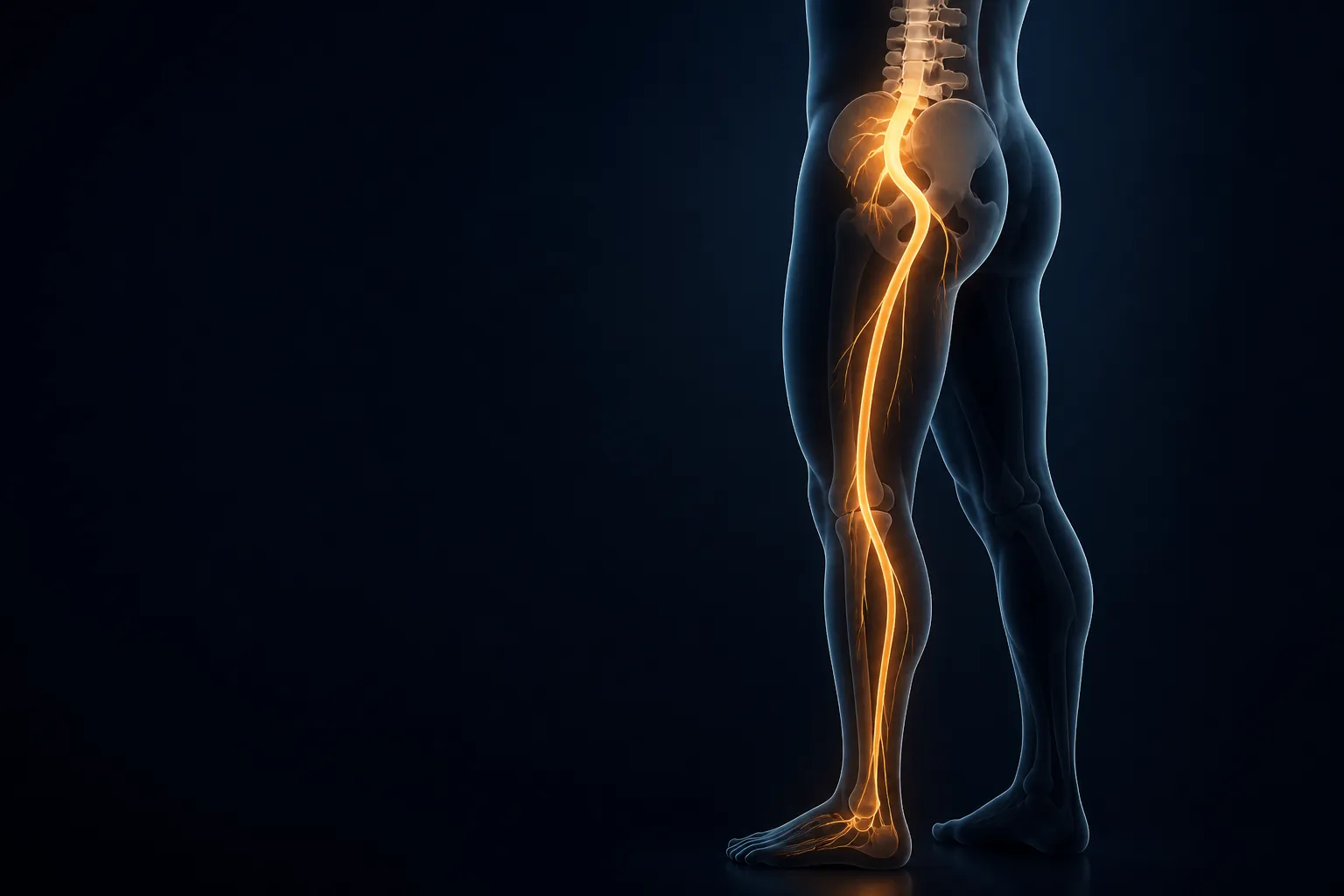
Our guide to sciatica symptoms and assessment explains why pain can be felt in the leg even when irritation begins near the lower spine.
The plan depends on the person rather than the scan label. Options may include guidance on activity, an individual exercise programme, short-term symptom management and medical review when needed. Imaging is not an automatic first step for every episode. [source]
Useful goals are practical: tolerating a workday, walking more comfortably or returning to a particular task. Ask what improvement would look like, when progress will be reviewed and what would prompt a different approach.
For local assessment information, visit our lower back pain service. Book a Liverpool assessment to discuss your symptoms rather than choosing treatment from an MRI phrase alone.
Our Liverpool spinal decompression service uses a motorised traction table. It is not surgery, and it should not be described as pushing a disc back into place. NICE recommends against traction for low back pain with or without sciatica; an assessment does not remove that evidence limitation. [source]
A consultation should therefore include the uncertainties, alternatives and whether any proposed care is appropriate, not a promise that a particular machine will repair the scan finding.
Go to an emergency department immediately for new difficulty passing urine, loss of bladder or bowel control, numbness around the groin or saddle area, or rapidly worsening leg weakness. Do not wait for a routine clinic booking. [source]
No. The location, symptoms and neurological findings are more informative than the word alone.
Not automatically. A specialist decision depends on the clinical picture, including any progressive neurological problem, rather than a disc label in isolation. [source]
Prime Wellness Chiropractic offers consultations at our Liverpool clinic and Penshurst clinic. Bring your questions and any existing scan reports so the next step can be discussed in context.
Book an assessment in Liverpool or book in Penshurst.
General educational information only. It does not replace an individual assessment, diagnosis or medical advice.

Get expert Chiropractic care right in Sydney. Our experienced team is here to help you restore mobility, reduce pain & get back to doing what you love.