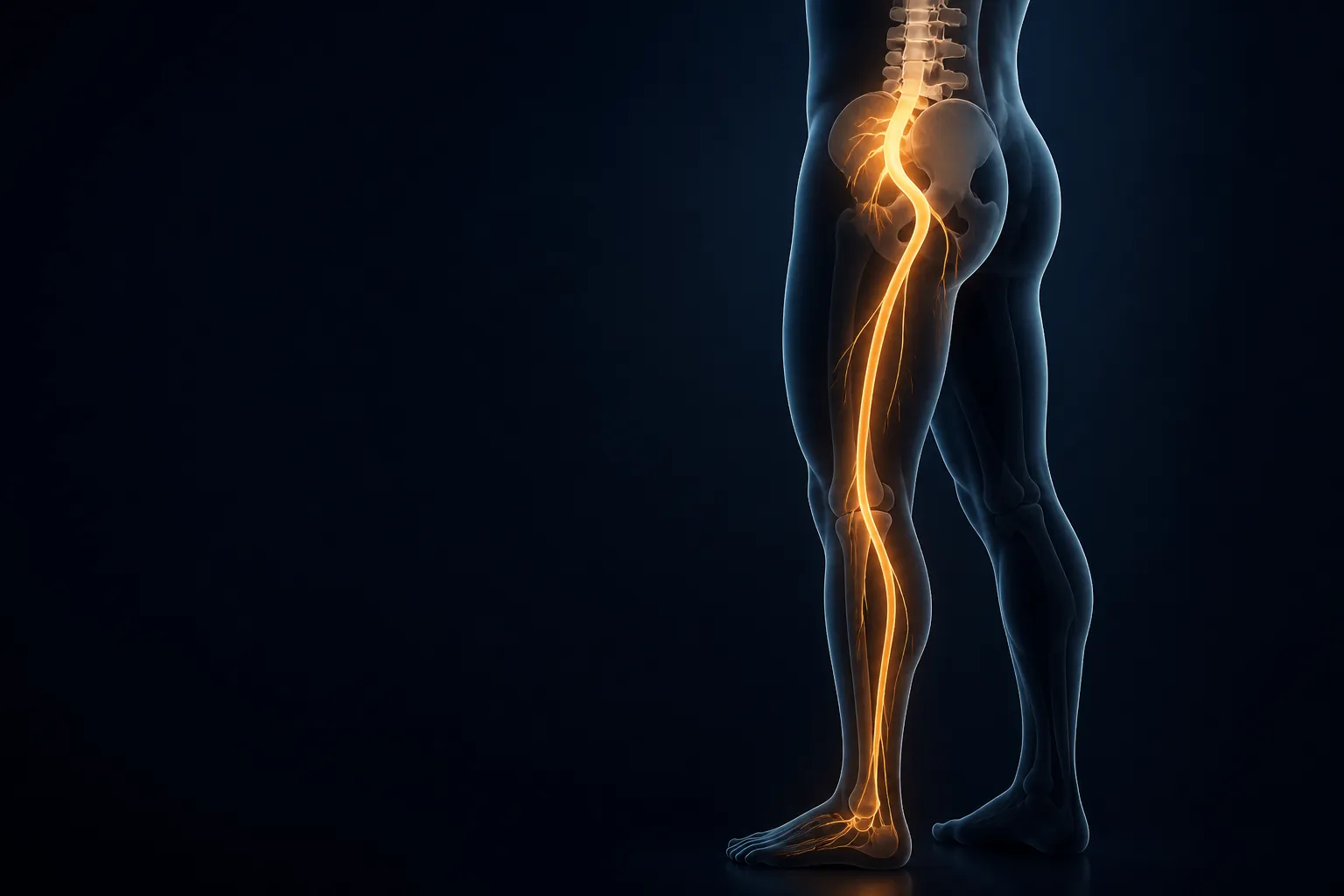
Sciatica is a common name for nerve-related pain that begins in the lower back or buttock and travels into the leg. It may feel sharp, burning or electric, and it can be accompanied by tingling, numbness or weakness.
Not every pain that travels into the leg is sciatica. A proper assessment matters because the most appropriate treatment depends on where the nerve is being irritated, how severe the symptoms are and whether there are any signs that require medical investigation.
At Prime Wellness Chiropractic, we assess sciatica and lower-back-related leg pain at our Liverpool clinic and Penshurst clinic. This guide explains the common symptoms and causes, what treatment usually involves, and where spinal decompression may fit for selected patients.
Sciatica describes pain associated with irritation or compression of one or more nerve roots in the lower spine that contribute to the sciatic nerve.
The sciatic nerve travels from the lower back through the buttock and down the back of the leg. When a nerve root is irritated, symptoms may be felt anywhere along that pathway, even when the main source is in the spine.
Sciatica commonly affects one side. The pain may worsen with prolonged sitting, bending, coughing or sneezing, although the pattern varies from person to person.
Sciatica symptoms may include:
Some people have significant leg pain with only mild lower back discomfort. Others experience both back and leg symptoms. Similar symptoms can also come from the hip, sacroiliac joint, muscles or other conditions, so self-diagnosis is unreliable.
Our sciatica and nerve pain service page explains how we assess these patterns in more detail.
A disc in the lower spine may bulge or herniate and irritate a nearby nerve root. Disc-related sciatica is common, but the presence of a disc change on a scan does not automatically prove it is the source of a person’s symptoms.
Spinal stenosis is narrowing around the spinal canal or nerve openings. It is more common with age and may cause leg symptoms that are worse during standing or walking.
A vertebra can shift relative to the one below it, or age-related changes can reduce the space around a nerve root. These findings need to be considered alongside the clinical examination rather than interpreted in isolation.
Less commonly, sciatica-like symptoms can be associated with trauma, infection, inflammatory disease, tumours or other medical conditions. This is why screening for warning signs is part of a responsible assessment.
An assessment usually begins with a detailed history of where the pain travels, what aggravates it, whether there is numbness or weakness, and how the symptoms affect walking, sitting, sleep and work.
A focused examination may include:
An MRI or other scan is not automatically required for every case. Imaging is generally most useful when the result is likely to change management, symptoms are severe or progressive, or the examination identifies a reason for further investigation.
There is no single treatment that suits every case. Management should be based on the likely cause, symptom severity, neurological findings and the person’s work, training and daily demands.
Complete bed rest is generally not recommended. Gentle walking, regular position changes and a gradual return to normal activity are often more useful than prolonged inactivity. The aim is not to push through severe symptoms, but to avoid becoming unnecessarily deconditioned.
Targeted exercise may be used to improve spinal movement, hip strength, trunk control and tolerance for sitting, lifting or walking. The correct exercise depends on the individual pattern; a movement that helps one person may aggravate another.
For related information, see our pages on lower back pain care and lower back stretches.
Manual therapy may be considered as one part of a broader treatment plan that also includes exercise, education and activity modification. It should not replace neurological assessment or be presented as a guaranteed cure.
Depending on the assessment, care may include gentle mobilisation, specific chiropractic techniques, soft-tissue work, nerve-mobility exercises and a progressive rehabilitation plan.
A GP may advise whether medication, injections, imaging or specialist referral is appropriate. Surgery is generally reserved for selected cases, such as severe or progressive neurological deficits or persistent symptoms that have not responded to appropriate conservative management.
Motorised spinal decompression is a form of controlled traction delivered through a specialised treatment table. At Prime Wellness Liverpool, a motorised spinal decompression table is available for selected patients after an assessment.
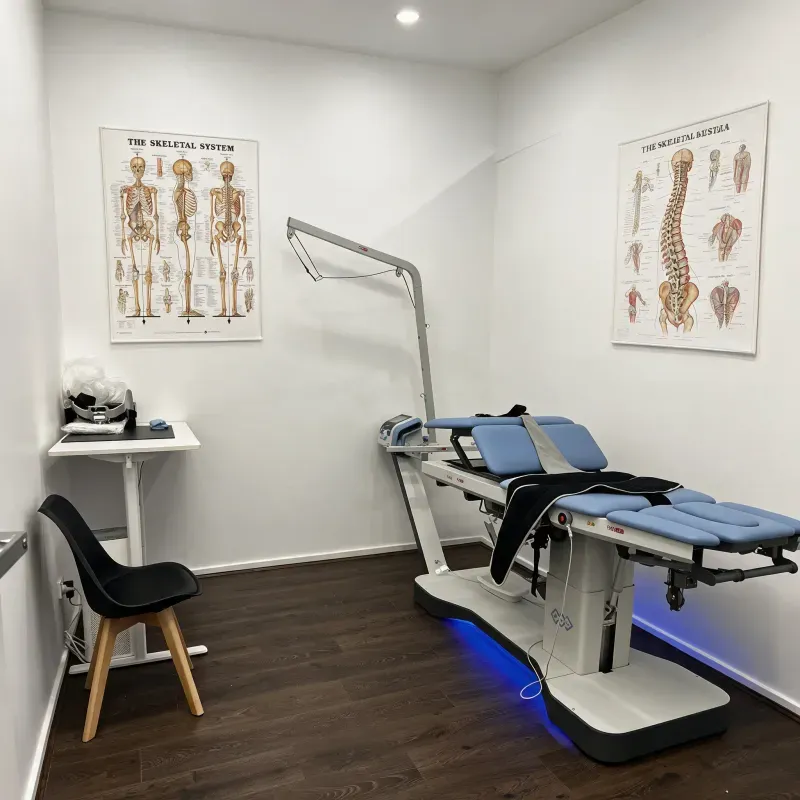
Spinal decompression may be considered when symptoms appear disc-related and the clinician determines that traction is safe and appropriate. It is not suitable for everyone, and it should not be described as a method that automatically retracts a disc or permanently removes nerve pressure.
The research on traction-based care for sciatica is mixed, and major clinical guidelines do not recommend routine traction for every person with low back pain or sciatica. For that reason, we use decompression selectively, monitor the response and combine it with an individual management plan rather than presenting it as a stand-alone cure.
Read more about spinal decompression therapy in Liverpool or our plain-English guide to what spinal decompression actually is.
Seek urgent medical assessment if sciatica is accompanied by:
These features do not automatically mean there is a serious condition, but they require prompt medical investigation.
Sciatica can recur when the same aggravating loads, movement patterns or underlying condition remain. Recovery usually involves more than waiting for the leg pain to settle. It may also require improving how the lower back, hips and trunk tolerate sitting, lifting and training.
For a more detailed explanation, read why sciatica keeps coming back and what may help.
The time frame varies. Many people improve over weeks to months, while others have persistent or recurring symptoms that require reassessment and a more structured plan.
Short periods of relative rest may be useful during a severe flare, but prolonged bed rest is generally discouraged. Keep moving within tolerance and seek advice if symptoms are worsening.
Not always. Imaging is most useful when it is likely to change treatment, when neurological signs are progressing or when the clinician is concerned about another condition.
No. Suitability depends on the suspected cause, clinical findings, medical history and contraindications. An assessment is required before treatment.
If you are looking for sciatica treatment in Liverpool or Penshurst, the first step is an assessment to clarify whether the symptoms are nerve-related and whether any further investigation is needed.
Prime Wellness Chiropractic provides consultations at both locations. Spinal decompression is available at the Liverpool clinic for suitable patients.
This article provides general educational information and is not a substitute for individual medical advice.

Get expert Chiropractic care right in Sydney. Our experienced team is here to help you restore mobility, reduce pain & get back to doing what you love.