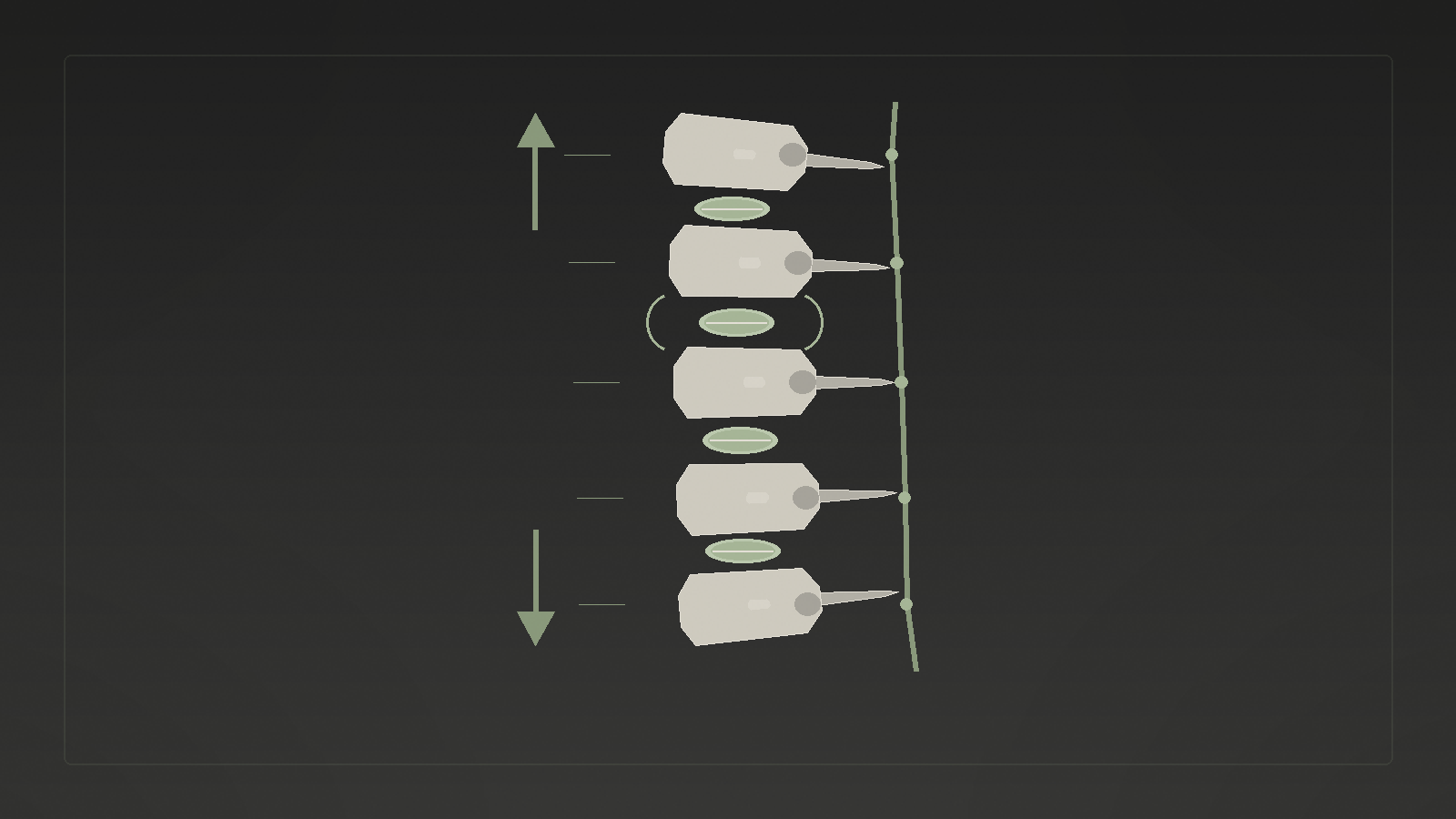
Spinal decompression sounds like something that happens in a hospital. In a chiropractic visit it is usually simpler than that.
In plain English, it is a gentle unload of the spine. The idea is to take a short amount of load off a disc and the nerve next to it, so that segment has a bit more room. Our low back pain and sciatica pages already name it as one of the tools we use, alongside adjustments, drop table, and nerve flossing.
It is not a branded tower. It is not a standalone program. It is one technique in a visit, used after we have assessed how the segment is actually loading.
We may use decompression when the story looks mechanical: sitting or lifting is loading a disc, or a nerve next to it is irritated. Common patterns include disc-related low back pain, sciatica-type nerve irritation, and a back that feels worse after a long sit or a heavy hinge.
That is a pattern, not a diagnosis you should give yourself from a blog. Disc pain, nerve irritation, and a stiff joint can feel similar. Assessment comes first.
If sitting starts it and walking eases it, or a deadlift left a sharp catch that will not settle, the first job is often to find which segment is taking extra load. Decompression is one way we can take some of that load off, for a short time, while we also restore movement around it.
Dr Leonardo Abboud (chiropractor) and Dr Rickardo Abboud (chiropractor) assess the lower back, pelvis, hips, and nerve tension together. Both are Macquarie-trained, members of the ACA, and registered with AHPRA. Leonardo spends more time with chronic or recurring spinal problems, posture, and progressive rehab. Rickardo spends more time with acute pain, sport, and gym load.
We treat on the first visit. You should leave knowing what is driving the pain, not just a label of "disc" or "sciatica."
If decompression fits, it sits inside that same visit. It is not a cookie-cutter add-on. Some people need more joint work. Some need nerve flossing. Some need the hips and core to start sharing load. The technique follows the assessment, not the other way around.
If you only unload a disc and never change how you sit, hinge, or share work through the hips, the same load comes back. That is why we do not sell it as a standalone fix, and we do not put people on endless maintenance for the sake of it.
On our service pages, decompression sits with the other tools we already use:
A useful sequence is simple. Assess. Unload and restore movement if that is what the segment needs. Then change how you sit and lift, and rebuild the strength that keeps it. We wrote about the nerve-load loop in why sciatica keeps coming back. The lower back stretches are a useful adjunct at home. They are not a substitute for finding the source.
See our pages on low back pain and sciatica and nerve pain if that is the pattern we are talking about.
This is educational information, not a diagnosis. If you have saddle numbness, rapidly worsening weakness, unexplained weight loss, fever, or a change in bladder or bowel control, see a doctor or emergency care first.
Prime Wellness Chiropractic is high-performance chiropractic. Monday to Friday 8am to 6pm, Saturday 9am to 5pm, Sunday closed. Walk-ins and same-day appointments are welcome. We treat on the first visit. HICAPS is available and we accept all major health funds.
Book online or call 0468 094 784.

Get expert Chiropractic care right in Sydney. Our experienced team is here to help you restore mobility, reduce pain & get back to doing what you love.