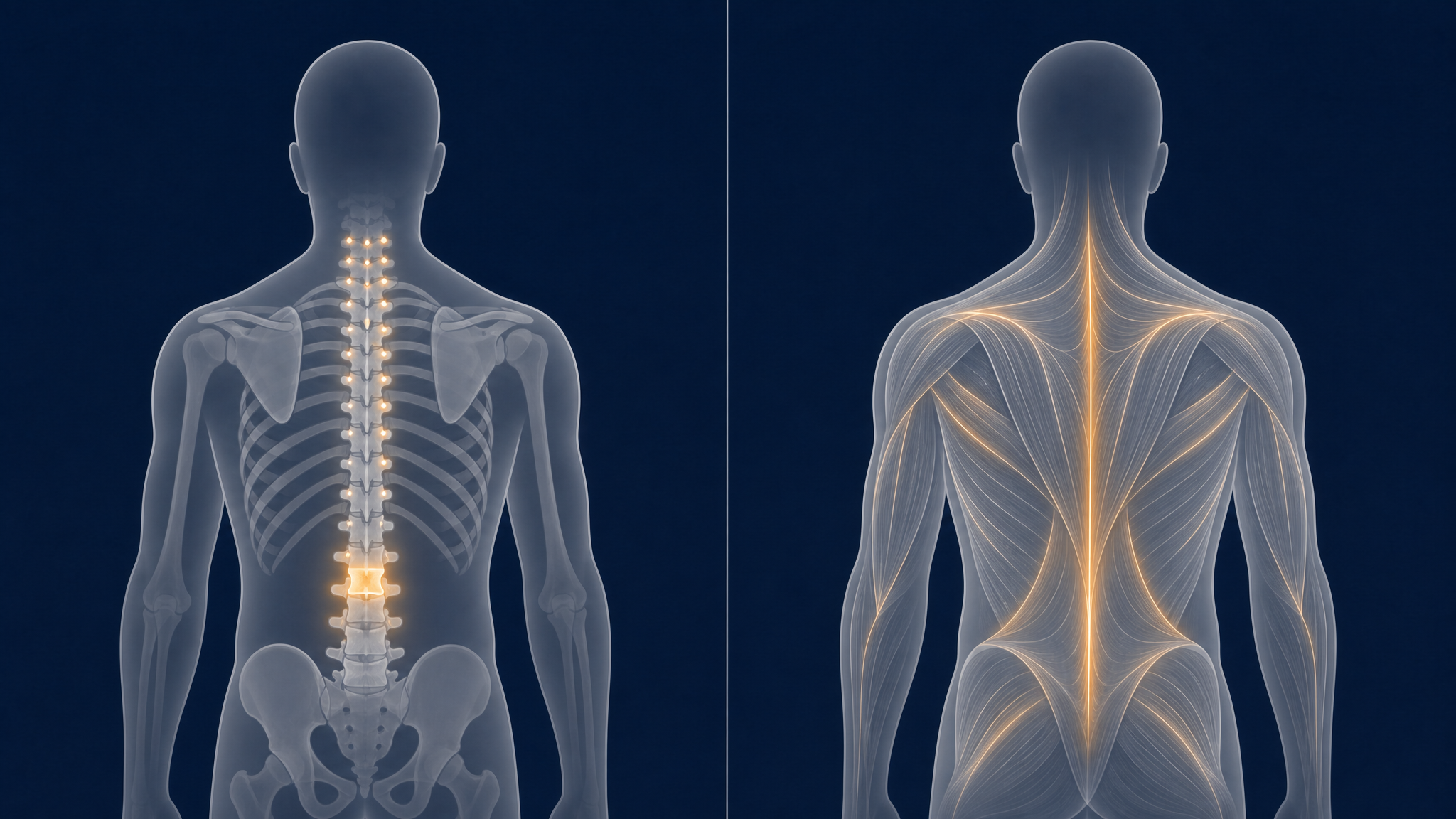
Chiropractor or osteopath? In Australia this question comes up more than almost anywhere else, because both professions are well established here, both are registered with AHPRA, and both treat the same complaints: a locked-up lower back, a stiff neck, a line of pain down the leg.
They are not rivals, and neither one is "the real one." They are different ways of working on the same body. A chiropractor tends to spend more time on specific joints, spinal movement, and nerve load. An osteopath tends to work more broadly across muscles, fascia, and joints in a longer, more flowing session. Plenty of people could do well with either. The useful question is which one fits the problem you actually have.
At Prime Wellness Chiropractic in Penshurst, we get asked this most weeks, often by someone who has already seen one or the other and is not sure whether to switch. This is the honest version.
The overlap is real, and it is worth naming before the differences:
If you have heard that one is "real" and the other is not, that is not how it works here. Both are regulated, both are trained, and the differences are in emphasis, technique, and how the visit runs.
Dr Leonardo Abboud (chiropractor) and Dr Rickardo Abboud (chiropractor) assess how your spine, pelvis, and the joints around them are moving together. If a segment is restricted, if the pelvis is not sharing load, or if a disc is irritating a nerve, the pain often shows up as stiffness, a sharp catch, a headache that starts in the neck, or a line down the arm or leg.
The work is specific. Find the joint that is not moving, restore that movement, take load off the nerve, and change how you sit, hinge, and lift so the same pattern does not reload the next day. Adjustments are typically quick and targeted. Visits are usually shorter and more frequent in the first phase, because the aim is to get a restricted joint moving and keep it moving while your body learns the new pattern.
We treat on the first visit. You should leave knowing what is driving the pain, not just a label of "back pain." We wrote about that way of thinking in chiro vs physio for lower back pain, and the same logic applies here.
Osteopathy starts from the idea that the body works as one connected system, so the session tends to look at the whole person rather than one segment. An osteopath will often work across the muscles, fascia, and joints of a broader area, using stretching, articulation, soft tissue release, and sometimes manipulation.
Appointments are often longer, with 30 to 45 minutes common for a standard visit, and more hands-on time spread over more of the body. Many people describe it as gentler and more gradual. It suits problems that feel diffuse and muscular rather than sharp and stuck, and it suits people who simply prefer a slower, whole-body session.
A good osteopath is not "just massage." A good chiropractor is not "just cracking." Both of those stereotypes waste people's time.
These are tendencies, not rules. Practitioners vary more than professions do, and a good one in either field will assess first and tell you if you are in the wrong room.
Start here if most of this sounds like you:
In those cases the first job is often mechanical: restore joint movement and unload the nerve. See our pages on low back pain, neck pain and headaches, and sciatica and nerve pain if that is the pattern.
Start with an osteopath if:
If that is you, osteopathy is not a lesser option. It is the right tool for that job.
This is common, and switching is not a failure. If you have had several osteopathy sessions and the same segment still catches, a specific joint assessment is a reasonable next step. If you have had adjustments and the joint moves well but everything around it still feels tight and tired, more soft tissue and whole-body work may be what is missing.
Tell whoever you see next what has already been done and how your body responded. That history is useful. Some people do well with both professions at different stages of the same problem.
Ask yourself one question: does this feel stuck, or does this feel tight everywhere?
Stuck, catching, nerve-like, worse with sitting: start with a chiropractor. Diffuse, muscular, and you want a longer whole-body session: start with an osteopath. Unsure: come in and get assessed. We would rather tell you if an osteopath is the better first step than keep you in the wrong plan.
This is educational information, not a diagnosis. If you have unexplained weight loss, fever, saddle numbness, loss of bladder or bowel control, or rapidly worsening weakness, see a doctor or emergency care first.
Prime Wellness Chiropractic is inside Priceline Pharmacy, 2/35 Penshurst St, Penshurst NSW. Monday to Friday 8am to 6pm, Saturday 9am to 5pm, Sunday closed. Walk-ins and same-day appointments are welcome. Book online or call 0468 094 784.

Get expert Chiropractic care right in Sydney. Our experienced team is here to help you restore mobility, reduce pain & get back to doing what you love.