You train. You sit. Recovery is the bit most people skip. That is who this is for.
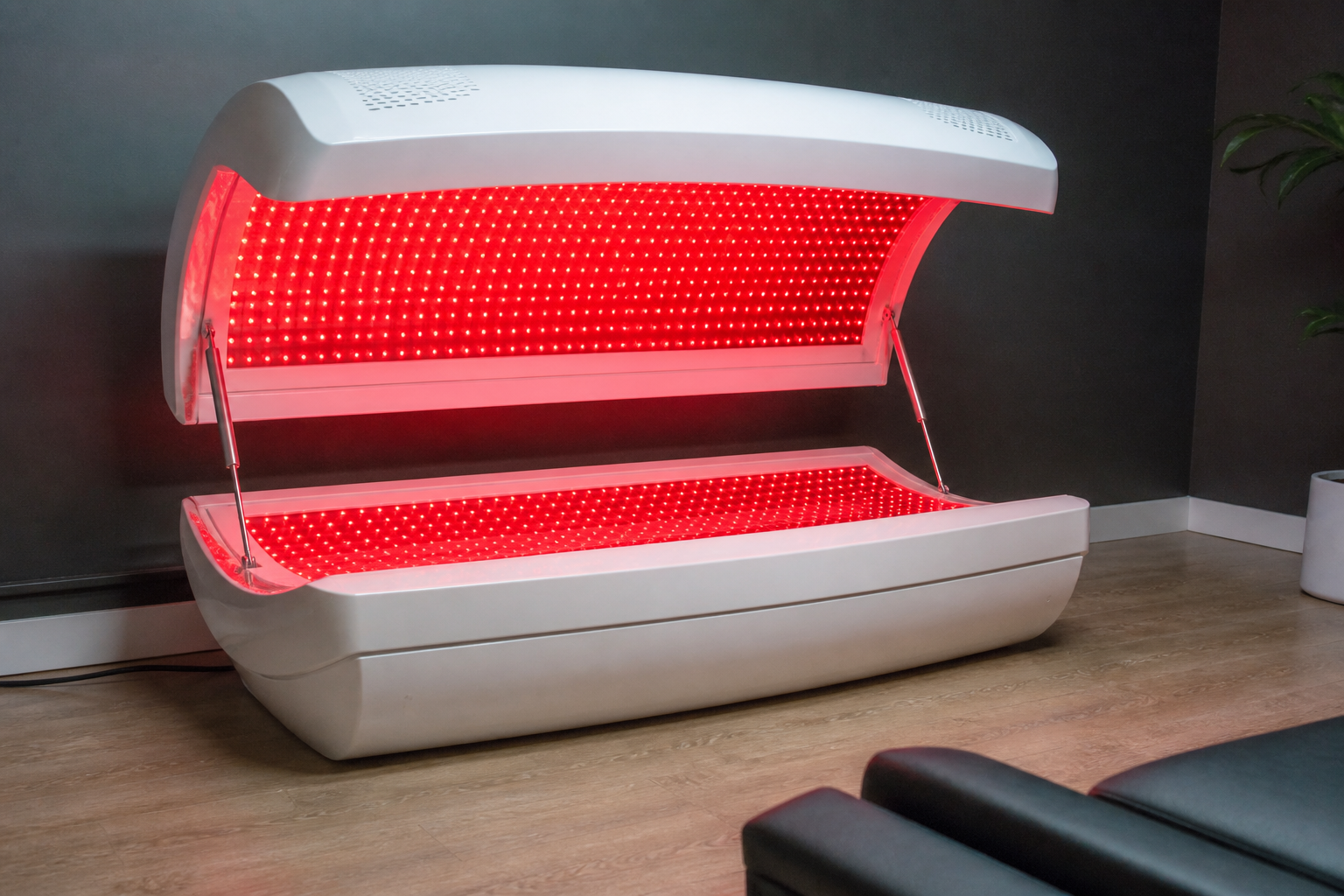
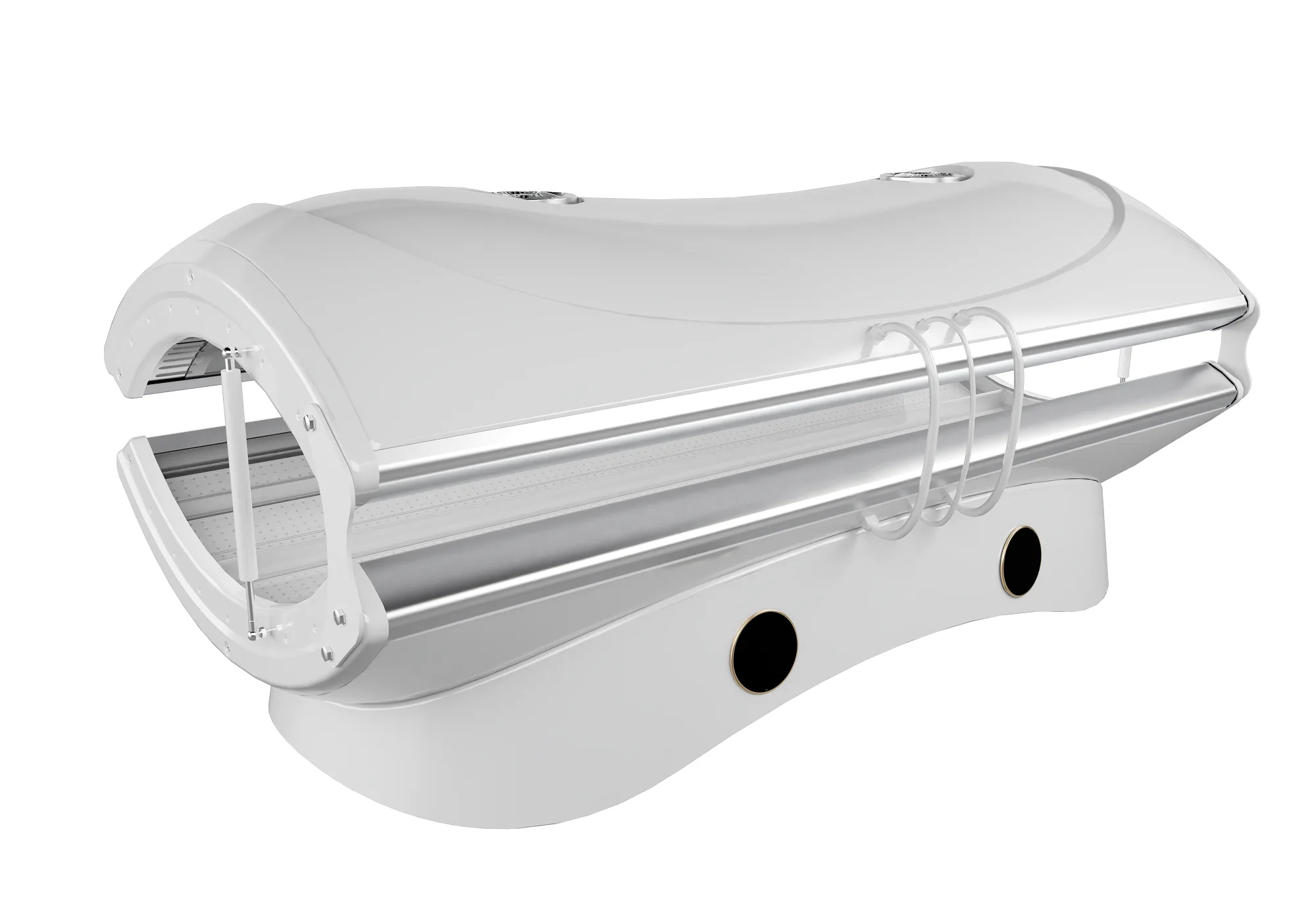
Red light therapy is 20 to 30 minutes lying in a full-body cabin of red and near-infrared light. It is not a sauna. It does not cook you. There is no UV. The light is the point. Your cells can absorb those wavelengths.
Across Sydney gyms and recovery rooms, the pitch is the same: a short lie-down, then back to work or training. The useful version is simpler than the ads. It is an add-on. It is not a diagnosis, not a fat-loss protocol, and not a substitute for getting a sore neck or back assessed.
You lie down. The cabin closes. Goggles on. Phone down. About 20 to 30 minutes. Most people wear underwear or light kit so more skin sees the light. You do not have to do anything.
It should not feel like a heat treatment. Some people notice a mild warmth as they settle. A lot of people leave describing the same three words: calmer, looser, a bit more in the tank. That is a feeling, not a guaranteed result.
There is no downtime. You can train or go back to a desk after. One session is a try. The pattern people actually keep is a short run of visits, not a one-off.
Gym-goers use it around hard weeks. The idea is less next-day heaviness, a bit more in the tank, and a way to recover without another hour of foam rolling. It sits next to sleep, food, and a deload. It does not replace them.
A long laptop block loads the neck and upper back. Light will not fix your screen height. After the joints have been assessed, it can be a useful extra for a work-sore neck rather than a mystery injury. Read why your neck hurts after a day at the desk and our neck pain and headache care.
Red and near-infrared light get taken up in the mitochondria, the part of the cell that makes usable energy. The working idea is simple: more ATP in tissue that is already under load, plus a nudge to local blood flow. That is why people talk about leaving a session less wrecked, not “high.”
Recovery studios sell this as a nervous-system reset. Fair language is softer. Some people use a session to downshift after work. It is not a treatment for insomnia, anxiety, or depression, and it is not a stand-in for care if those are the real problem.
This is the line that fills Instagram. Collagen, complexion, glow from within. Some people notice skin looking a bit more even after a run of sessions. Treat that as a possible extra, not the reason to skip a GP or a dermatologist, and not a wrinkle-erasing promise.
Some people notice the tape around the waist move after a run of sessions. That is not a fat-loss machine, and it is not a substitute for food and training. Think contour and how clothes sit, not a new body-comp protocol.
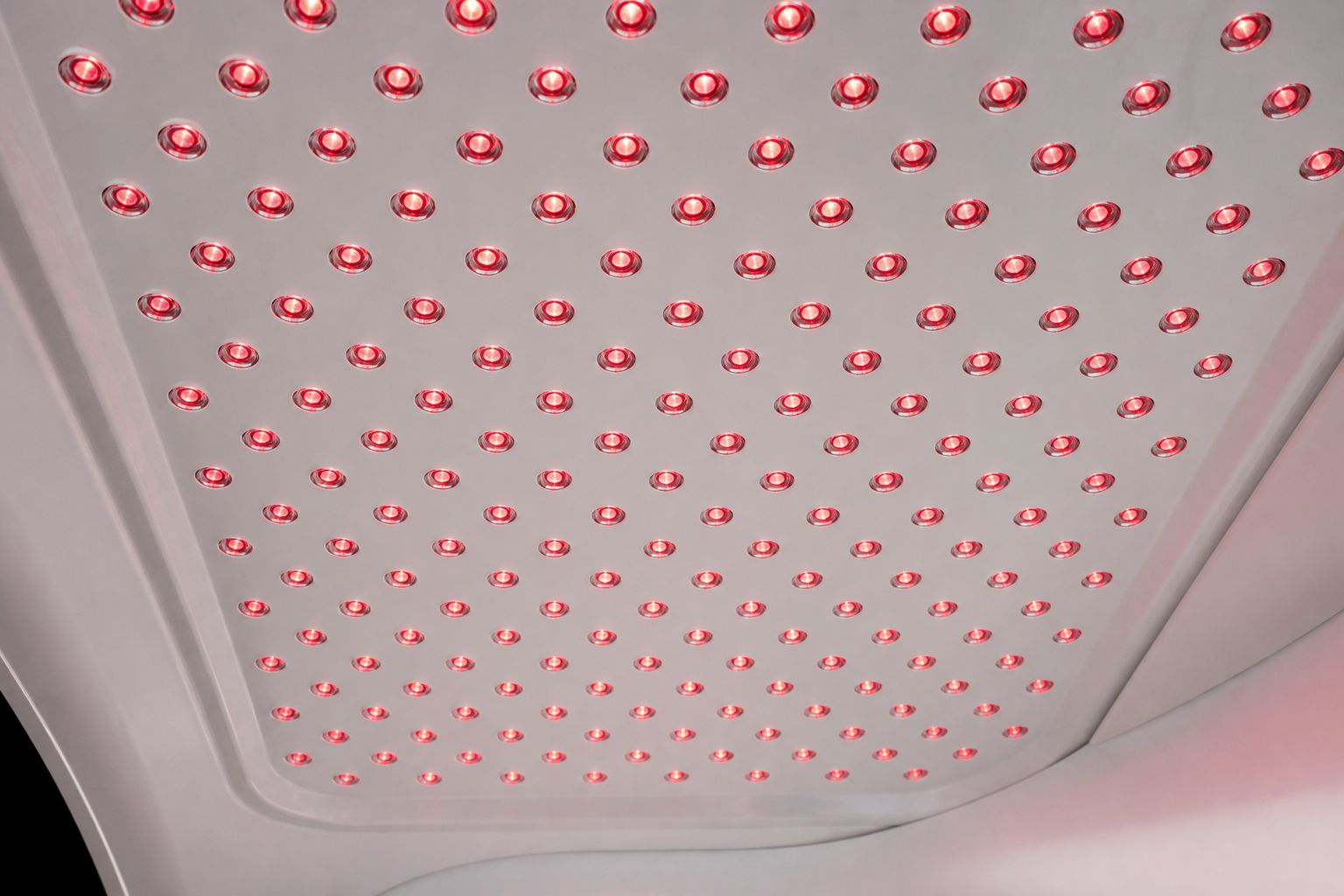
Visible red sits around the 630 to 660 nanometre range. Near-infrared sits deeper, around 810 to 850. Those bands are the ones cells can use. The light is absorbed by cytochrome c oxidase in the mitochondria. That is the step that can change how much ATP the cell has to work with.
Dose matters. Too little does nothing. Too much can flatten the effect. More time in the cabin is not automatically better.
Downstream, people and papers talk about local blood flow and how tissue handles load. That is the mechanism. It is not a diagnosis. A sore back still needs an exam. For a generic lower-back ache, light therapy has a weak record as the treatment. Start with low back pain care if that is the pattern.
Trials on neck pain and knee osteoarthritis have used red light as a research tool. Results vary, and a clinic cabin is not a research protocol. The honest take: it can be worth using as recovery kit. It is not a cure, and it will not replace an assessment when something keeps coming back.
The commercial pattern is boring on purpose. Two or three sessions a week for a few weeks, then less often if it is still useful. Skip the “results after one session” line. One visit tells you if you can lie still and how you feel after. A short block tells you if it is worth keeping.
This is its own treatment. It is not mixed into an adjustment and not bundled with spinal decompression.
Skip it, or get cleared first, if you are on photosensitising medication, have a light-sensitive condition, are pregnant or breastfeeding, have active cancer at the treatment site, or cannot protect your eyes. Goggles stay on. Sunglasses are not a substitute. If a session leaves you feeling off, stop and say so.
This is educational information, not a diagnosis.
No. You lie there. No needles, no crack, no sweat-drip.
Yes. Eyes get shielded for the whole session.
Yes. There is no downtime. Some people use it after a session, some on an easy day.
More skin in the light is the usual setup. Underwear or a swimsuit is typical. You will not be walking the clinic floor like that.
Same idea, different delivery. This is a full-body cabin. You are in it, not standing in front of a panel in a bedroom.
No. If the back or neck keeps flaring, get it assessed. Light can sit next to that care. It is not that care.
Walk-ins and same-day are welcome. Book online or call 0468 094 784.

Get expert Chiropractic care right in Sydney. Our experienced team is here to help you restore mobility, reduce pain & get back to doing what you love.